My elementary school was housed in a 1903 building with a 1933 addition, by far the most prominent building in a town just large enough to warrant a solitary blinking-yellow traffic light. By the 1970s, when I was enrolled, the school had been merged with an adjacent district, and the building downgraded from K-12 to a K-6 elementary. There was no elevator to the second floor, the third floor had been deemed hazardous and was off-limits entirely, and there was considerable doubt about the building’s compliance with new fire codes. Another addition was constructed to the larger school while I attended 7th grade there, and the old school closed for good the following fall. It still stands today, but abandoned, and in an advanced state of decay.
What, another Arduino throttle already?
Ahh, you’ve noticed that I’ve been on a bit of a throttle jag lately. I just couldn’t help myself on this one. I saw the APDS-9960 RGB and Gesture Sensor in a recent SparkFun new-products announcement, and immediately knew what to do with it.
How To Build Chuck’s New Throttle
Would you like to build your own version of the automated, Arduino-based throttle I recently built for Chuck’s layout? Well, read on!
Introducing the Library Project
We toured the Central Library’s new Bausch & Lomb building on its opening day, back in 1997. Being the proud parents of a toddler, we naturally visited the new Children’s Center on the second floor. I noticed the glassed-in space under the stairs immediately. “Good place to put a railroad,” I thought. It took me seventeen years to turn that idle notion into reality, but here it is.
The Week Has Been Too Busy
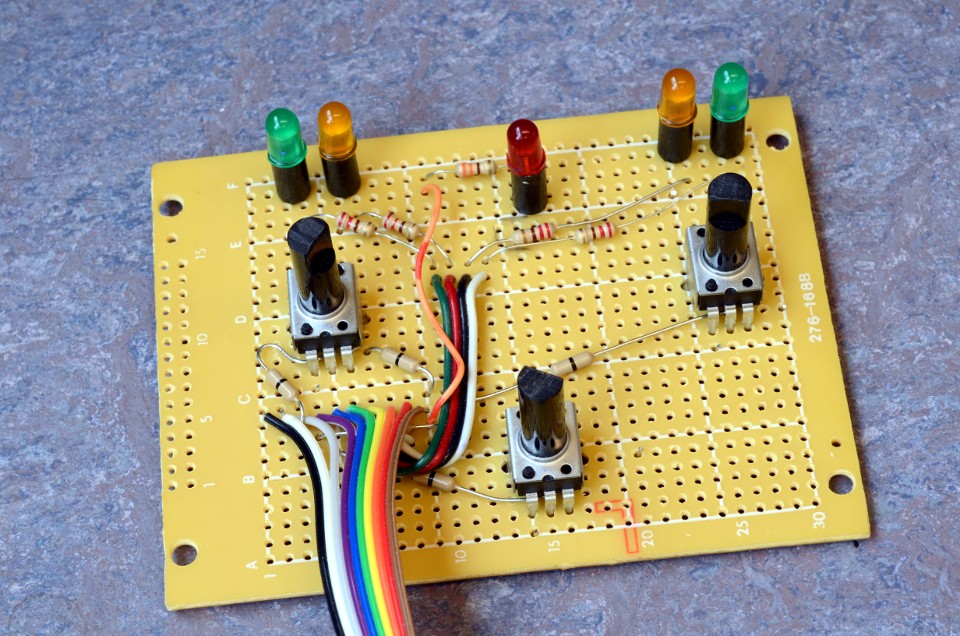
In addition to preparing for the RIT show, I’ve been frantically soldering another throttle together for an exhibition I’m setting up on Monday, documenting Chuck’s new throttle, and doing some emergency track repair on George’s railroad. I’ll have more details on all of these things soon, so bear with me.
Update: Corrugated Curve
Four years ago, I had an upcoming show for which I needed a reverse loop module. I had one week, and a minimal budget, to build one. With limited after-hours shop time at my disposal, I decided to forego wood and experiment with corrugated cardboard instead. I’ve written about the construction of this module elsewhere. So, how’s it holding up?
Chuck’s New Throttle: Installation
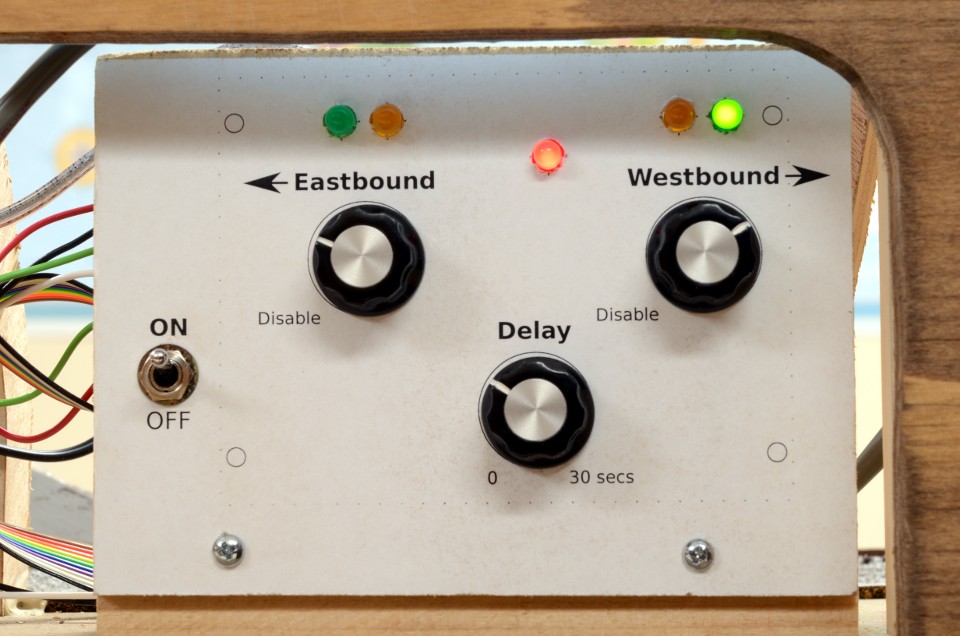
As you may recall, Chuck’s new throttle was essentially functional, but needed some detail work before installation in his layout. I’m smack in the middle of fall show season, so this is a particularly bad time to get things accomplished. The morning after the Mini Maker Faire, I dragged myself out of bed early, and proceeded to attach the remaining pieces.
Soldering
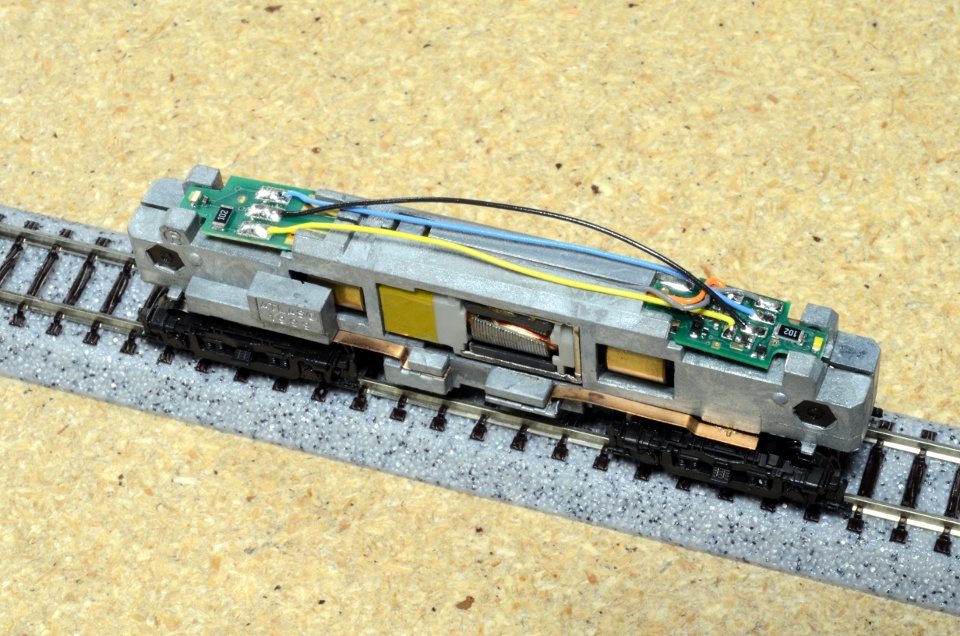
As I mentioned in last week’s post, I just got a decoder into another Atlas RS-3. This is my first decoder installation since I got my new Hakko FX-888D soldering station last winter. After 30 years of working with Radio Shack pencil irons, I found myself doing enough electronics work (mostly, but not entirely, train-related) to justify the upgrade. The Hakko arrived just in time for a project with 115 individual LEDs that needed soldering together. What a difference!