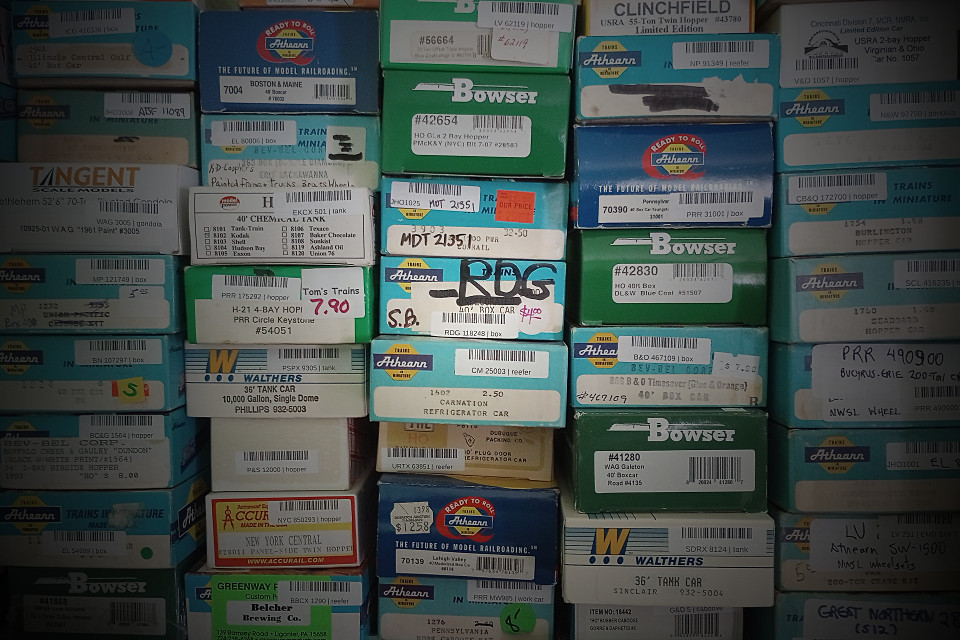
My wife thinks I have too many trains. I vehemently disagree with that assessment, but lately I’ve had some difficulty making an effective counter-argument. I’m not exactly sure how many I do have, and I need to do something about that. Should be a pretty straightforward task, right? We live in a world chock-full of databases and spreadsheets and hardware to run them on, and if all else fails, 3×5 index cards are still cheap and plentiful.
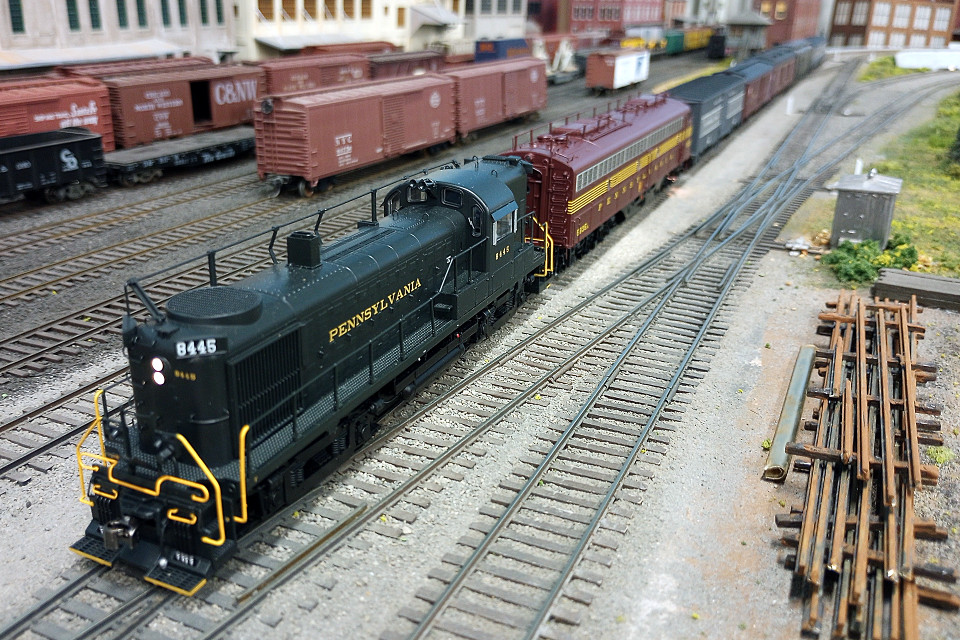
Ahh, know-it-alls! A typical model railroad club contains a variety of personality types, and there’s always a know-it-all or two in the mix. You know the type: the guy with all the answers that you never asked for. The guy who relishes calling you out for some perceived shortcoming in your hobby activities. If you’ve ever wondered why “Rule #1: It’s My Railroad” has become such a popular refrain within the hobby, it’s because of this guy. So what if some hoppers in my 1949-era coal train have the Pennsy “shadow keystone” logo from 1954? So what if my Lackawanna Trainmasters are equipped with Mars lights? So what if my North Coast Limited is pulled by Alco PAs, instead of F-units? Maybe I don’t know it’s wrong, but even if I do, I don’t care. It’s model trains. I like what I like. Lives do not hang in the balance.
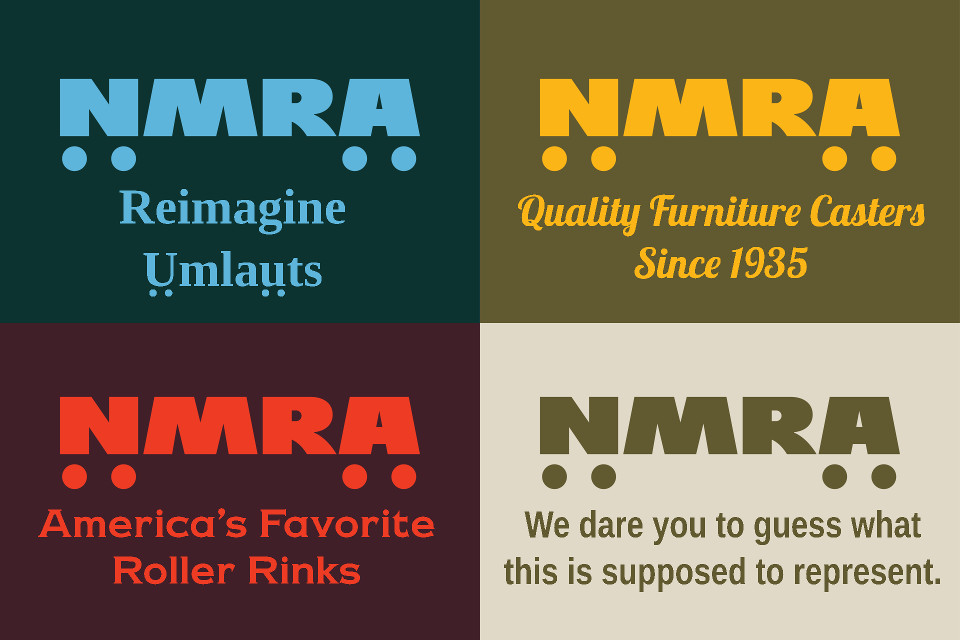
I was at the Port Byron rest stop on the Thruway, en route to the Syracuse show, getting coffee on Saturday morning when I noticed that the rebrand had gone live. NMRA leadership has been teasing it for weeks, without showing anything. The train show kept me busy all day, of course, but when I got to the hotel that night, I dug in for a closer look.
I joined the HO club downtown last year. Hey, why not? I’ve got some rolling stock, the club’s just a short drive away, and I already know many of the members. For the club’s annual open house, member trains must meet strict mechanical standards: metal wheels throughout, metal-shank knuckle couplers, NMRA weight recommendations, and so on.
My motley collection of old Tyco streamlined cabooses doesn’t even come close to complying. I decided to run some anyway.
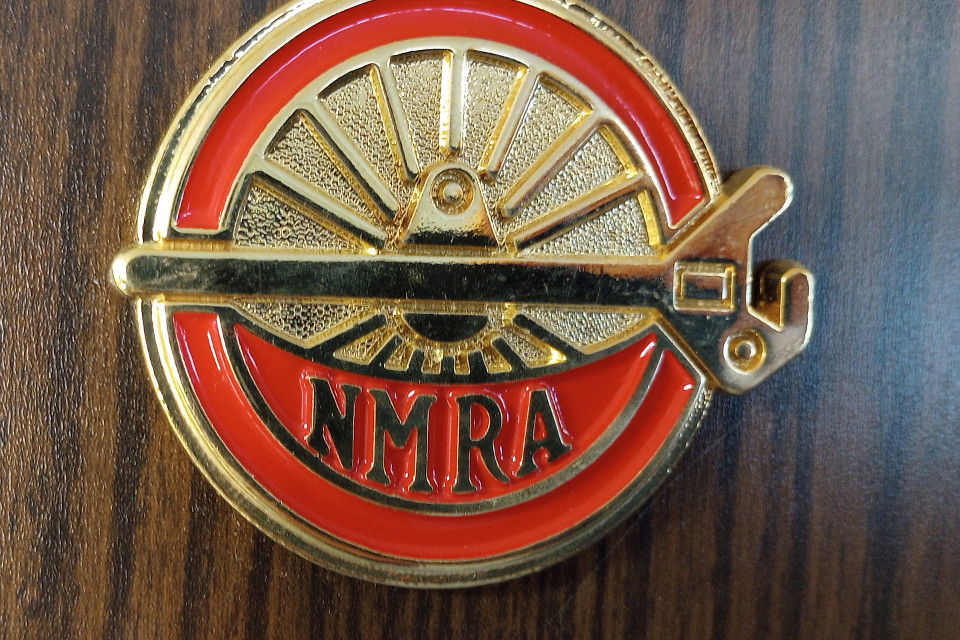
When the superintendent of my NMRA division suggested, at a gathering a few years ago, that I work to earn a Master Model Railroader (MMR) certificate, I recognized the gleam in his eye. Decades earlier, my scoutmaster had the same gleam when suggesting I go for the Eagle badge. It awakened some surprisingly complex feelings from deep inside myself.
As is often the case with mysteries, I stumbled into this one quite by accident. A few years ago, Sam needed to thin out his rolling stock, and he sold me a pair of undecorated Atlas Trainmasters, and the decoders to go into them, at a very good price. I stuck them in a shoebox, unsure of what to do with them. They’re the Phase 1A variation with the big Mars light in the short hood, which doesn’t match the Trainmasters owned by the Lackawanna or the Pennsy. They are correct for the Wabash (outside my geographic territory), the Southern Pacific (even farther) or Fairbanks-Morse demonstrators (outside my era, even if decals were available, which they aren’t.) I finally pulled them out a few weeks ago, got the decoders in, and ran them for an hour at a library show. Nice engines.
By every measure, they’d be a good addition to my show roster, but they’re going to need paint first. So what to paint them? A freelance scheme of some kind, perhaps? How about a riff on the so-called “McGinnis” paint schemes of the New Haven and the Boston and Maine? That’d be cool.
Our N scale club has a meetup every month in the local makerspace, and there’s a table just inside the entrance where people leave interesting junk to share. Mostly it’s an assortment of broken consumer electronics, old hand tools, outdated reference manuals, and other technological flotsam. Before one recent meeting, we were tipped off that a sizable pile of train-related things had been dropped off. We set upon it like hungry vultures, naturally, as soon as we arrived. It was the dregs of an HO-scale railroader’s hoard. No trains or track, but plenty of useful, or semi-useful items. Somebody came away with a tote full of scenery material. A few people divvied up the electronics parts and power supplies. There were even a few hand tools.
“Would you like to go to Chicago with me?” asked Peter one day in early April. The newly-merged CPKC had just announced their Final Spike steam tour, and Franklin Park, Illinois was the stop closest to us. My first impulse was to politely decline—I’d just taken several days off work to spend time with my son during the Total Eclipse, and a twelve-hour drive each way to and from Chicagoland didn’t sound particularly fun, steam or no. On further consideration, though, I changed my mind. Peter’s a transplanted Aussie, retired, and a big New York Central fan. The Final Spike Tour’s headliner, restored Canadian Pacific 2816, was the closest he was ever going to get in this day and age to his beloved NYC J3a. I suggested Amtrak instead of I-90 to him, and he immediately booked us seats on the Lake Shore Limited.



 Furniture Railroads